High-Frequency Impact Wrench for Seized Glow Plugs, 1/4", 15–60 Nm
-
Code:124323
-
Weight:1.300 Kgs
Overview:
✔ For removing carbonised, corroded or seized glow plugs
✔ High-frequency twin-impact mechanism combines vibration with controlled torque
✔ Four loosening levels: approximately 15, 25, 35 and 60 Nm
✔ Also suitable for spark plugs and other sensitive threaded connections
✔ 1/4" drive with CrMo sockets, extensions and impact universal joint
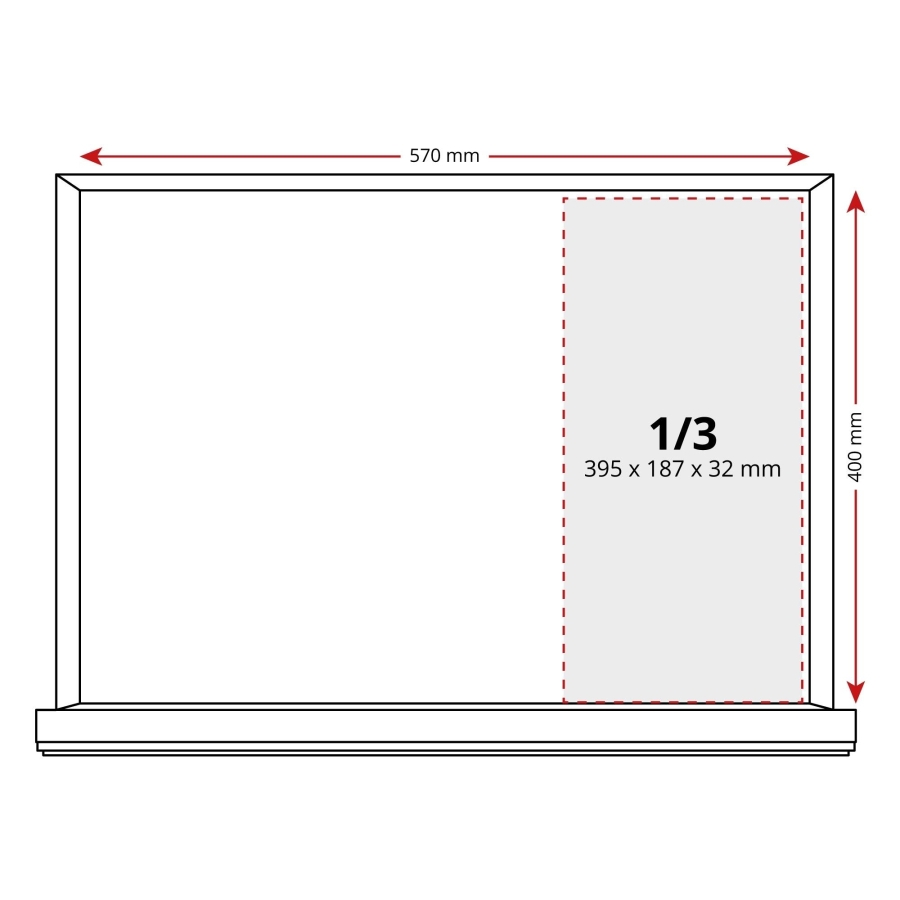
✔ Supplied in a robust storage case with 1/3 foam insert

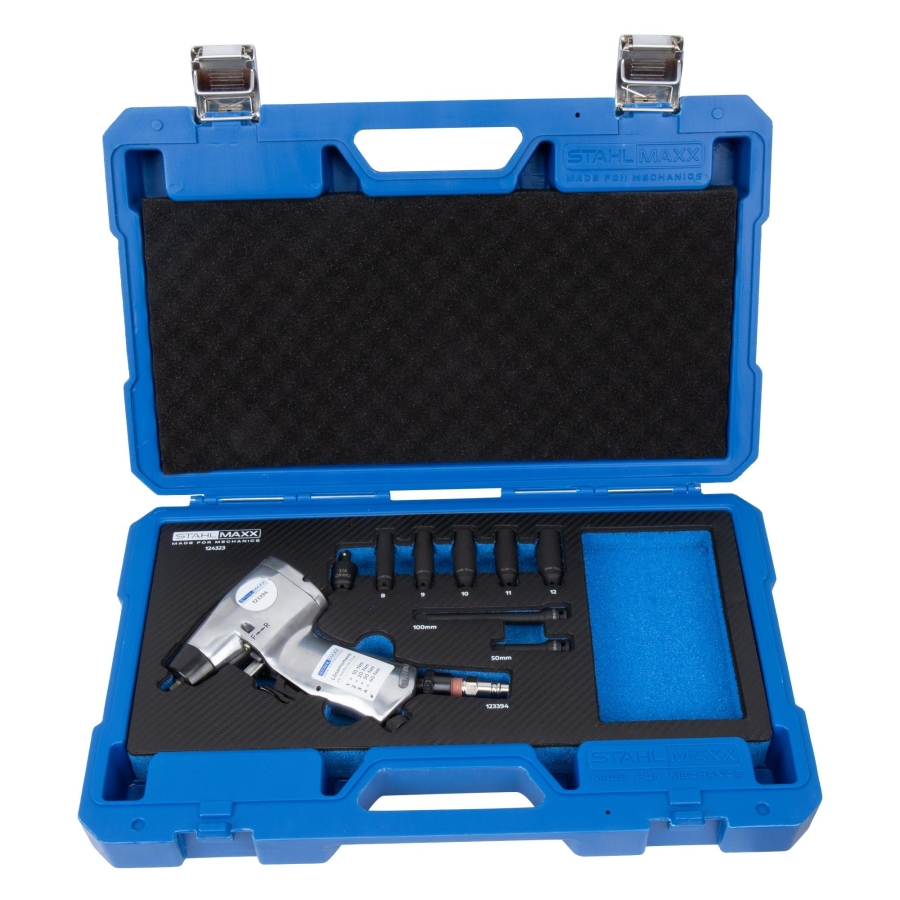
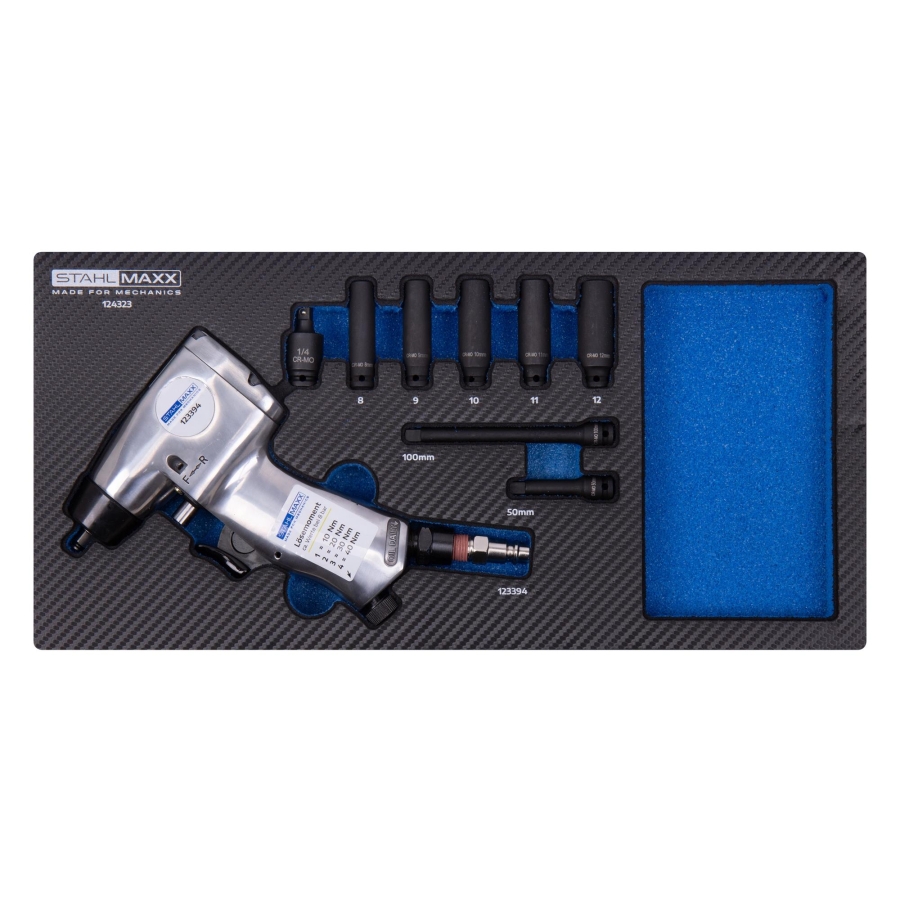
This special STAHLMAXX pneumatic impact wrench features an extra-fast, high-frequency twin-impact mechanism. It is designed for removing glow plugs that are seized due to carbon deposits or corrosion.
The combination of vibration and controlled loosening torque can help release the glow plug while reducing the risk of breakage and the need for time-consuming drilling and extraction.
The tool is also suitable for spark plugs and other sensitive threaded connections where low loosening torque combined with vibration is beneficial.
When the Glow Plug Remains Seized in the Bore
This high-frequency vibration impact wrench is intended as a final attempt to release the glow plug before more extensive drilling and extraction work becomes necessary.
If the glow plug can be unscrewed to the end of its thread but remains held inside the bore by deposits around the shaft, use suitable special extraction attachments to pull it out.
After removal, thoroughly clean the glow plug bore and thread. Also observe the special tools listed under “Additional Tools”.
Recommended Procedure
- Allow the engine to reach operating temperature.
- First attempt to loosen the glow plug carefully using a standard 1/4" ratchet.
- Begin using the high-frequency impact wrench at level 2. Allow the vibration and impact action to work for several minutes at each level, increasing the setting gradually only when required. Follow the tool manufacturer’s operating and duty-cycle instructions.
- Before using the highest setting, check the applied loosening torque with a torque wrench capable of measuring counterclockwise torque, such as item.no. 123133 with a range of 20–120 Nm. Do not exceed the specified breakage torque of the glow plug.
- Allow engine oil to penetrate the glow plug bore and operate the vehicle for up to seven days before attempting removal again.
Always use the lowest effective torque and observe the specifications of the vehicle and glow plug manufacturer.
Glow Plug Breakage Torque
The following reference values are based on NGK data. Values from other manufacturers may be approximately 5 Nm lower:
M8: 20 Nm
M9: 30 Nm
M10: 40 Nm
M12: 50 Nm
Glow Plug Tightening Torques
The following reference values are based on NGK data:
M8 metal glow plug: 8.5 Nm
M8 ceramic glow plug: 10 Nm
M9 metal glow plug: 11 Nm
M9 ceramic glow plug: 18 Nm
M10: 15 Nm
M12: 23 Nm
Always follow the tightening torque specified by the vehicle or glow plug manufacturer.
Scope of Delivery
1 × High-frequency impact wrench for glow plug removal, 1/4", four levels from 15–60 Nm
1 × Impact-resistant CrMo ball joint, 1/4"
1 × CrMo impact extension, 50 mm, 1/4"
1 × CrMo impact extension, 100 mm, 1/4"
1 × CrMo six-point socket, 8 mm, 1/4"
1 × CrMo six-point socket, 9 mm, 1/4"
1 × CrMo six-point socket, 10 mm, 1/4"
1 × CrMo six-point socket, 11 mm, 1/4"
1 × CrMo six-point socket, 12 mm, 1/4"
1 × Compressed-air coupling plug, 1/4"
1 × Foam insert, 1/3
1 × Robust storage case
Technical Specifications
Drive: External square, 1/4" (6.3 mm)
Clockwise torque: 60 Nm*
Loosening torque, level 1: 15 Nm*
Loosening torque, level 2: 25 Nm*
Loosening torque, level 3: 35 Nm*
Loosening torque, level 4: 60 Nm*
No-load speed: 13,000 rpm*
Connection thread: 1/4"
Recommended hose diameter: 10.0 mm
Air consumption: 113 l/min
Working pressure: 8 bar
Overall length: 124 mm
Weight: 850 g
Testing: Tested in accordance with EC industrial standards
*The stated values are averages and may vary depending on the air pressure and the diameter and length of the air line. The values were measured after five seconds at a constant pressure of 6.3 bar.
-
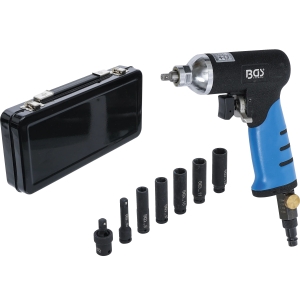
Pneumatic Impact Wrench for Glow Plugs, 1/4", 20-50 Nm
Price: €269.00Available • 5–10 Days Delivery