Pneumatic and Manual Brake Bleeder & Oil Extractor, 9.5L
-
Code:3155
-
Weight:4.702 Kgs
Overview:
✔ Combined pneumatic and manual brake bleeder and oil extractor
✔ Suitable for engine oil, transmission oil, differential oil and other non-corrosive fluids
✔ Enables clean oil extraction through the dipstick tube without lifting the vehicle
✔ Built-in manual vacuum pump for operation without compressed air
✔ Pneumatic brake bleeding and manual brake bleeding possible
✔ 9.5 L tank with volume scale and stable base
✔ Includes silicone brake bleeding hose with valve for one-handed operation
✔ Extraction hoses in 9.8, 8.0, 6.7 and 4.5 mm diameters

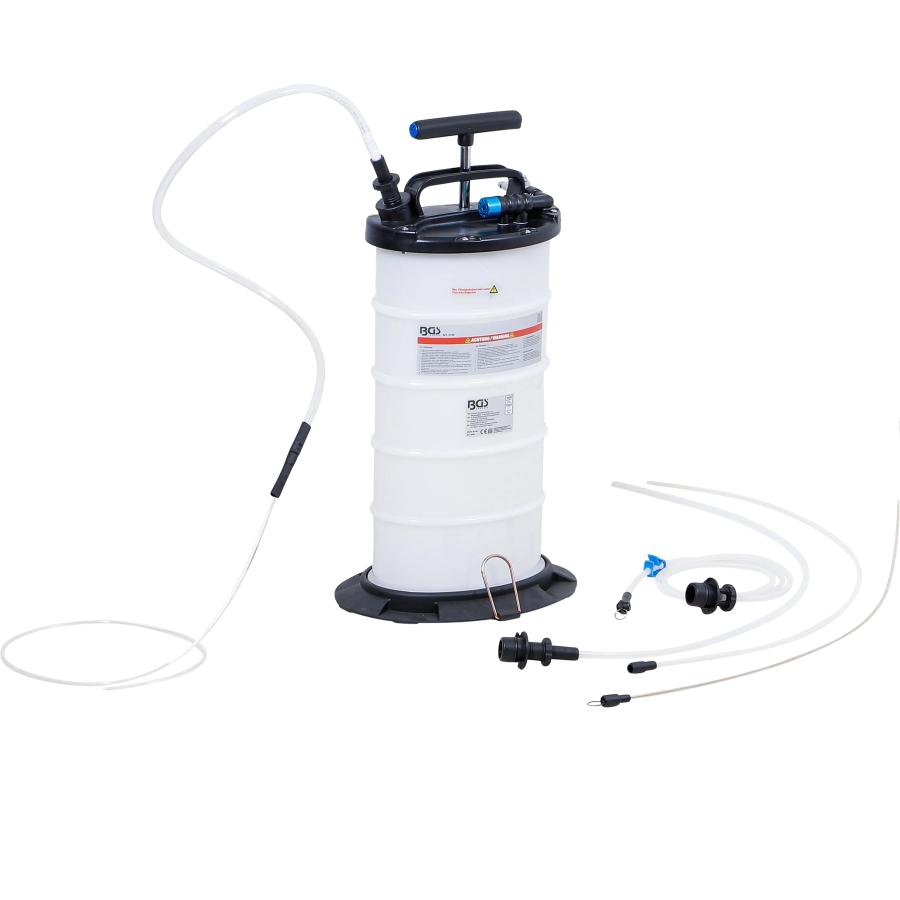
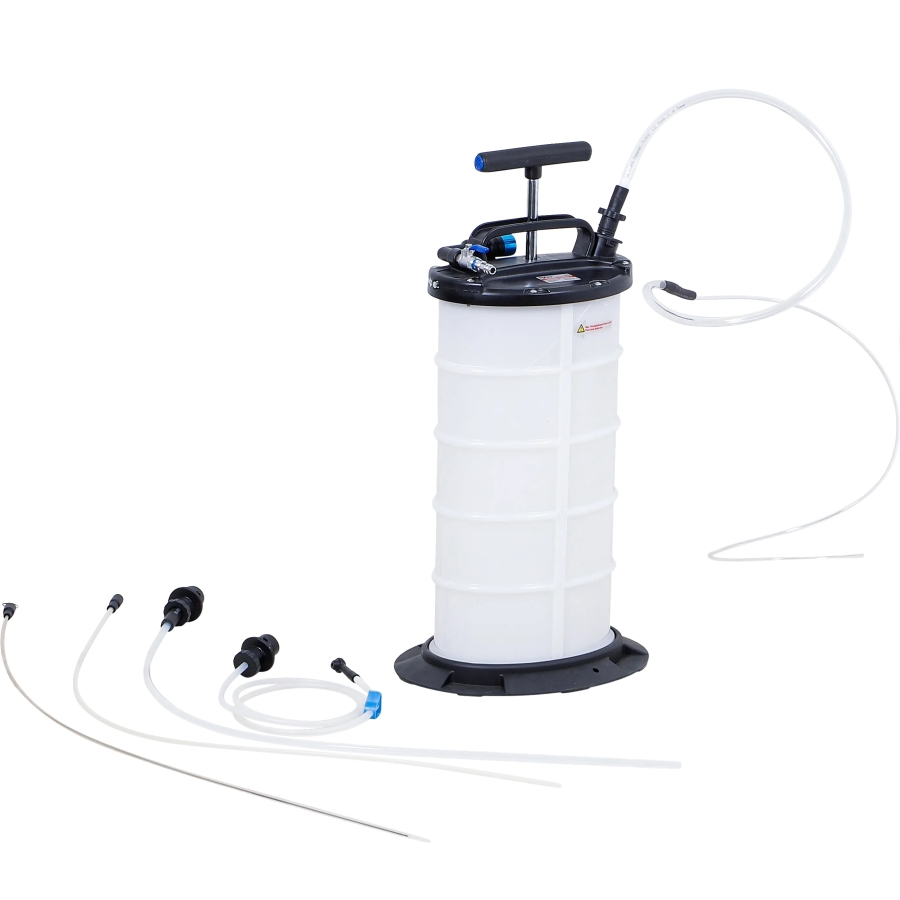
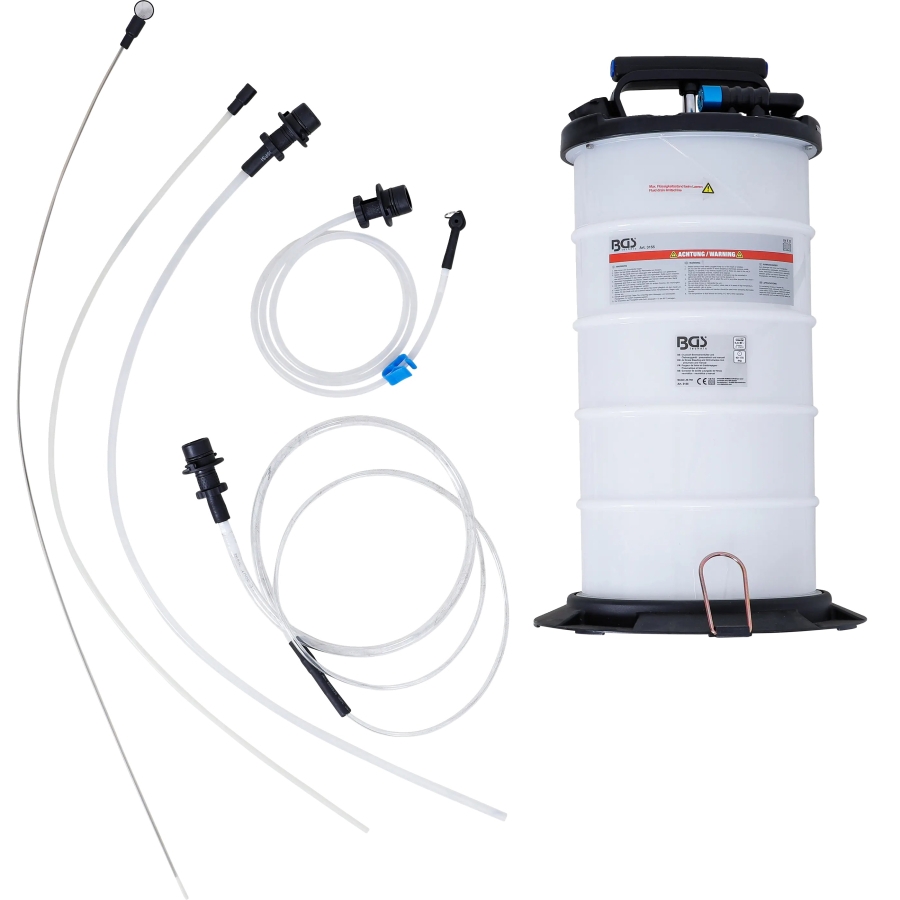
This multifunctional tool combines a pneumatic brake bleeder with a manual and pneumatic oil extractor, making it an ideal solution for professional workshops and demanding DIY users.
The device is designed for clean oil extraction and brake bleeding without requiring additional equipment, allowing maintenance work to be performed quickly and efficiently.
Clean Oil Extraction Through the Dipstick Tube
The pneumatic extraction system allows engine oil to be removed directly through the dipstick tube, eliminating the need to remove the drain plug or occupy a vehicle lift.
This makes the device especially useful for:
- Vehicles without an oil drain plug
- Compact vehicles such as Smart
- Fast oil changes without lifting the vehicle
- Routine workshop maintenance
The extractor is suitable for:
- Engine oil
- Transmission oil
- Differential oil
- Other non-corrosive fluids
Manual and Pneumatic Operation
A major advantage of this unit is the integrated manual vacuum pump.
This allows:
- Oil extraction without compressed air
- Brake bleeding without compressed air
- Extraction of smaller fluid quantities
- Mobile operation where no air supply is available
For workshops equipped with compressed air, the device can also be used as a pneumatic brake bleeder for faster operation.
Convenient One-Hand Brake Bleeding
The supplied special silicone brake bleeding hose features an integrated valve, enabling convenient one-hand operation.
This simplifies brake bleeding procedures and makes the device suitable for virtually all hydraulic brake systems.
The integrated manual vacuum pump additionally allows brake bleeding even when no compressed air connection is available.
Large 9.5L Tank with Measuring Scale
The 9.5-liter container provides sufficient capacity for large quantities of extracted oil.
The integrated volume scale allows the extracted fluid quantity to be monitored easily during operation.
A stable base ensures secure positioning of the unit in the workshop.
Technical Specifications
- Operation: Pneumatic and manual
- Applications: Oil extraction and brake bleeding
- Suitable fluids:
- Engine oil
- Transmission oil
- Differential oil
- Non-corrosive fluids
- Tank capacity: 9.5 L
- Container scale: Yes
- Manual vacuum pump: Integrated
- Brake bleeding: Pneumatic and manual
- Brake bleeding hose: Silicone hose with valve
- Extraction hose diameters:
- 9.8 mm
- 8.0 mm
- 6.7 mm
- 4.5 mm
Applications
Suitable for:
- Engine oil changes through the dipstick tube
- Brake system bleeding
- Clutch hydraulic bleeding
- Transmission oil extraction
- Differential oil extraction
- Workshop and mobile service applications
Particularly suitable for vehicles where oil changes are performed without using a lift or where no oil drain plug is fitted.
Engine Oil Extraction
- Bring the engine oil to operating temperature.
- Close the compressed air valve.
- Connect the oil extractor to the compressed air supply.
- Connect the appropriate oil extraction hose to the suction hose of the extraction unit.
- Insert the oil extraction hose through the dipstick tube until it reaches just above the bottom of the oil pan. Leave the guide wire inside the hose during insertion to provide additional stability.
- Remove the guide wire.
- Open the compressed air valve. The engine oil will now be extracted.
- If no more oil flows through the extraction hose, push the hose slightly deeper into the dipstick tube. If oil still does not flow and the extracted quantity approximately corresponds to the normal oil capacity (minus the oil filter volume), all used oil has been removed from the engine.
- Close the compressed air valve and remove the oil extraction hose from the dipstick tube.
Smaller quantities of oil, such as differential oil, transmission oil, or engine oil from motorcycles, can be extracted using the hand vacuum pump.
For this procedure, the compressed air valve must remain closed and the hand vacuum pump must be operated manually. The extraction process is otherwise identical to compressed air-assisted extraction.
Brake Bleeding
- Fill the brake fluid reservoir with a sufficient amount of fresh brake fluid.
- Connect the brake bleeder to the compressed air supply.
-
Connect the brake bleeding hose to the bleed screw on the brake caliper or wheel cylinder.
Note: Always begin bleeding with the brake caliper or wheel cylinder furthest away from the master cylinder, followed by the next furthest, and so on.
For most left-hand drive vehicles, the bleeding sequence is:
- Rear right
- Rear left
- Front right
- Front left
For right-hand drive vehicles, refer to the vehicle service manual or determine the position of the master cylinder before proceeding.
Brake Bleeding with Compressed Air Assistance
- Close the clamp valve on the bleeding hose and open the compressed air valve. This creates a vacuum inside the bleeding unit.
Brake Bleeding with the Hand Vacuum Pump
- Close both the compressed air valve and the clamp valve on the bleeding hose.
- Operate the hand vacuum pump until sufficient vacuum has been created inside the bleeding unit.
Bleeding Procedure
- Connect the brake bleeding hose to the bleed screw and open the bleed screw on the brake caliper or wheel cylinder.
-
Open the clamp valve on the bleeding hose.
Once the brake fluid flows through the hose free of air bubbles, first close the bleed screw and then close the clamp valve.
- Repeat this procedure for each brake caliper or wheel cylinder to ensure that all air has been completely removed from the brake system.
Important: During and after the bleeding process, regularly check the brake fluid level and refill it if necessary.