Vacuum & Pressure Hand Pump Kit with Gauge | Diagnostic Set
-
Code:8067
-
Weight:2.054 Kgs
Overview:
✔ Complete vacuum and pressure diagnostic kit
✔ Suitable for testing vacuum systems, actuators, and engine components
✔ Enables brake fluid extraction and system bleeding
✔ Dual-function hand pump (vacuum & pressure)
✔ Accurate diagnostics via integrated gauge readings
✔ Includes multiple adapters for versatile applications
✔ Designed for professional workshop use

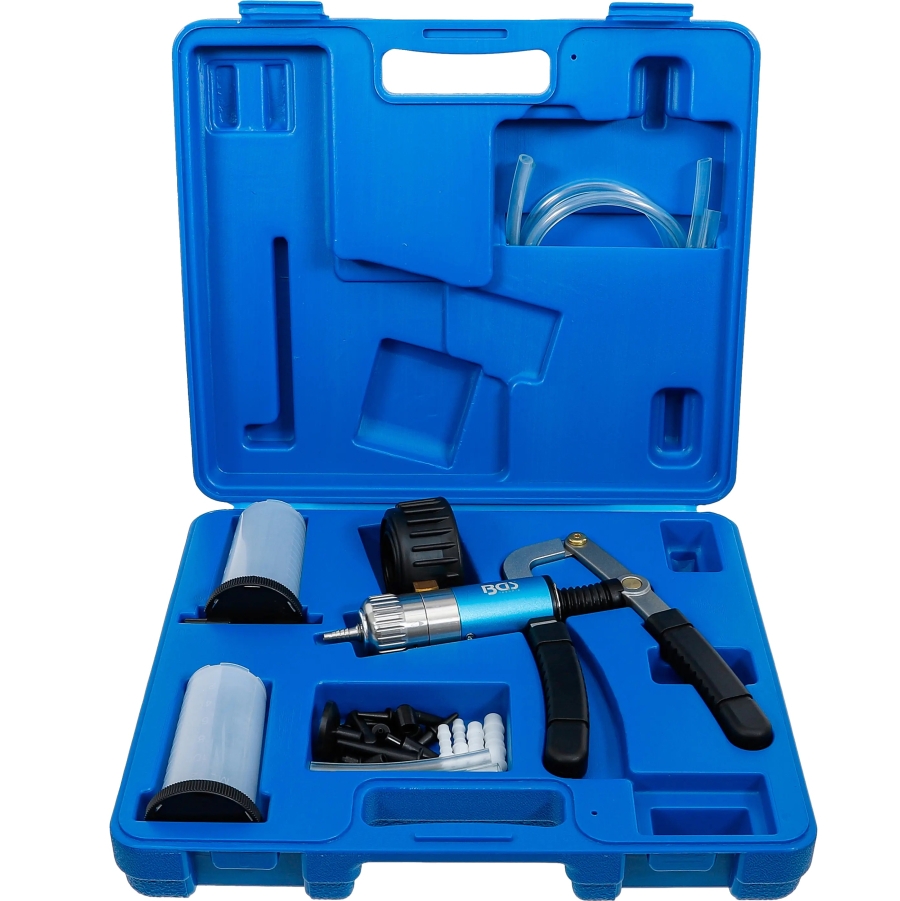
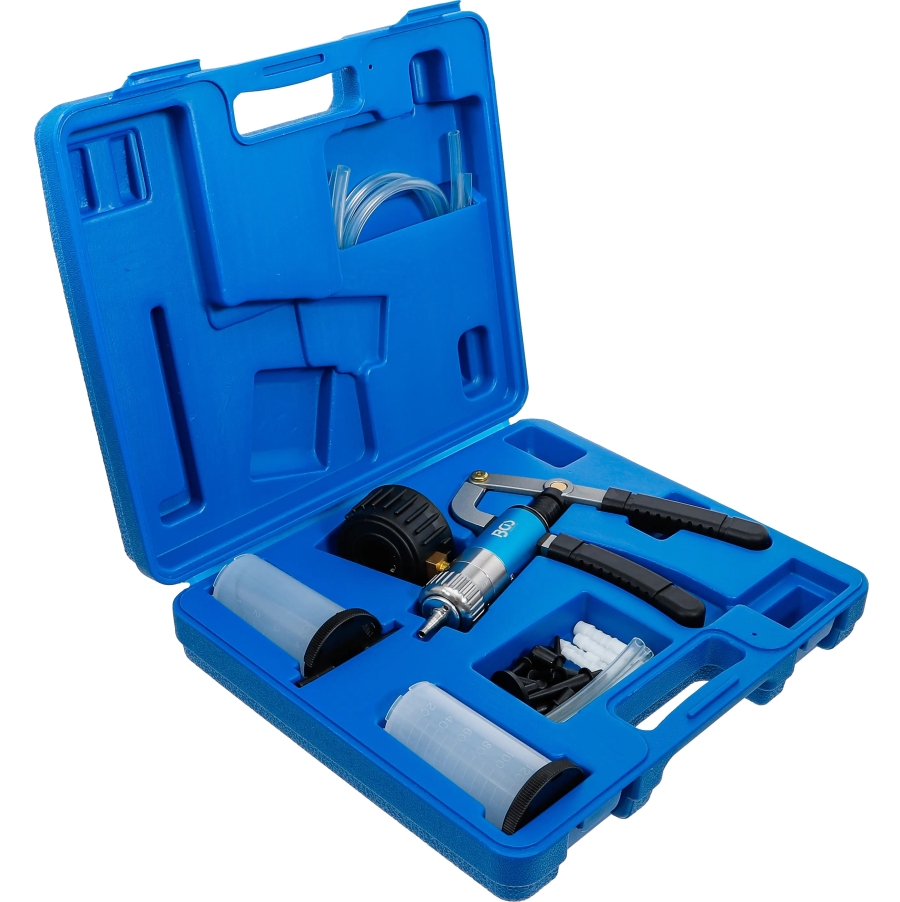
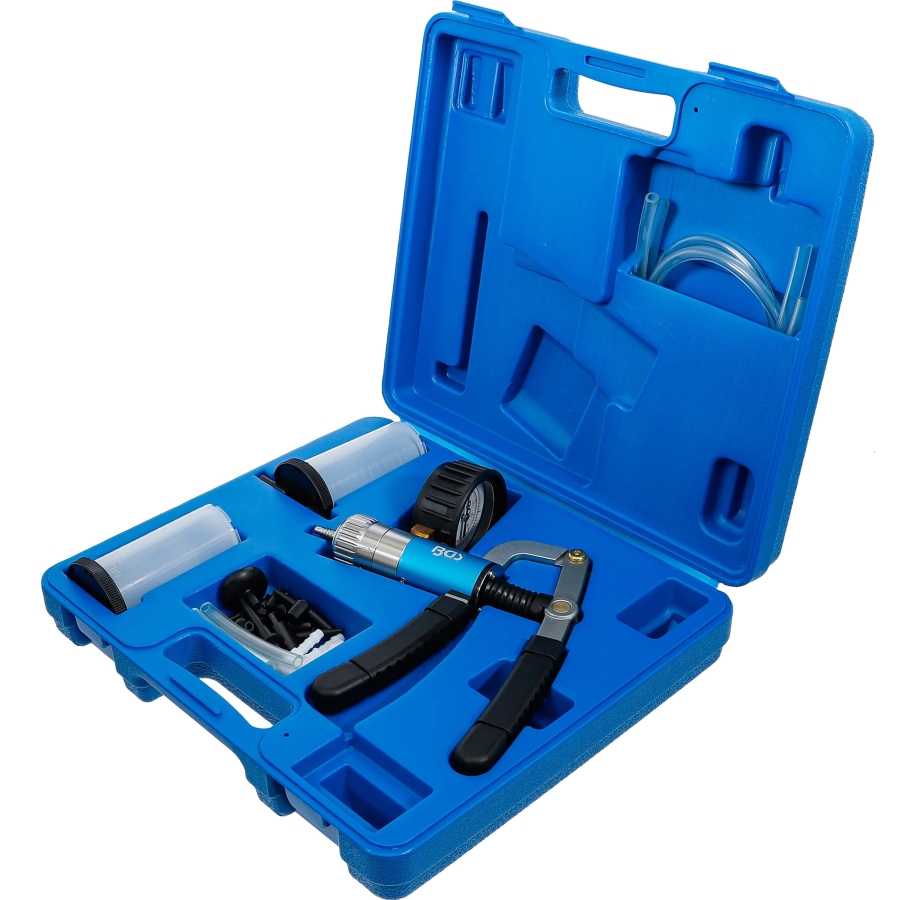
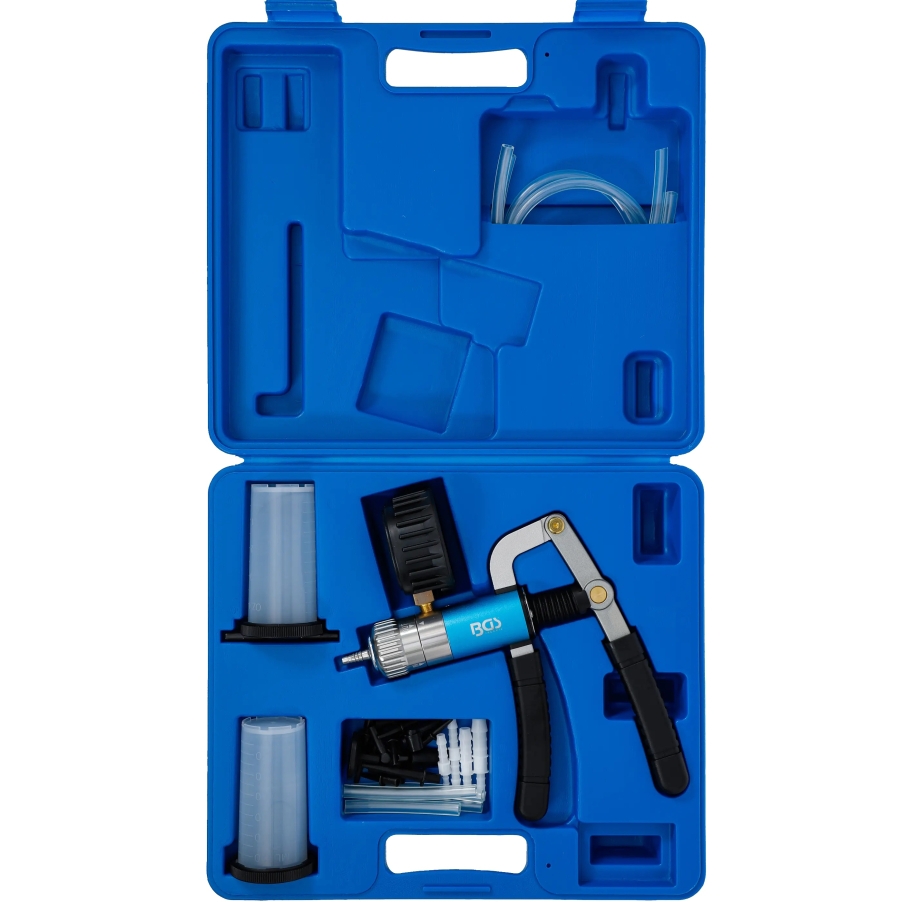
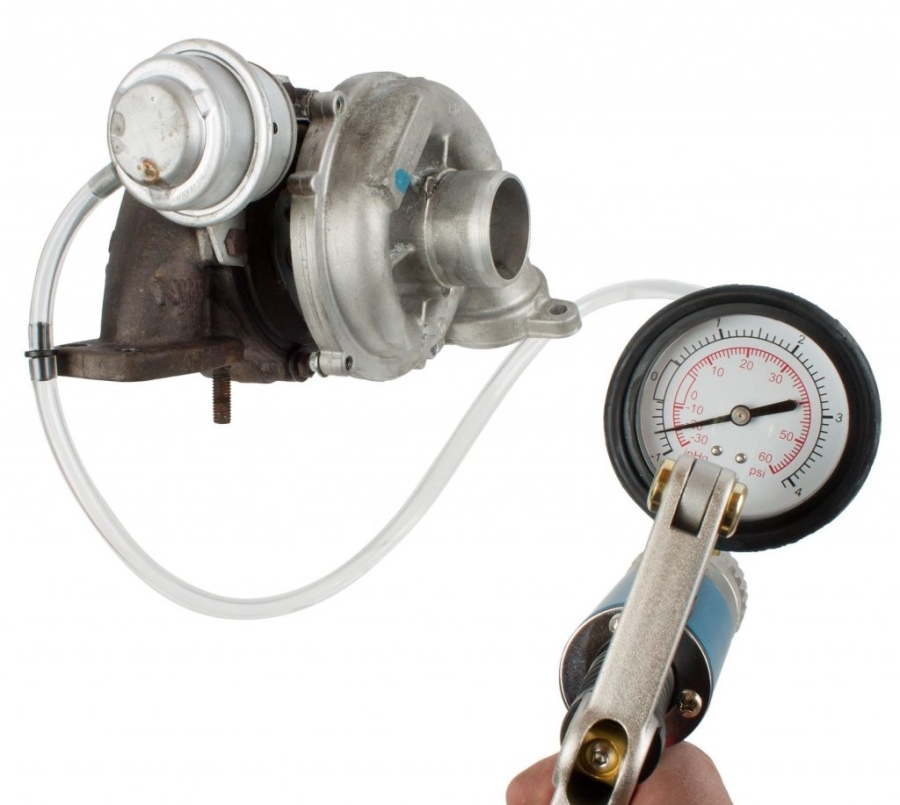
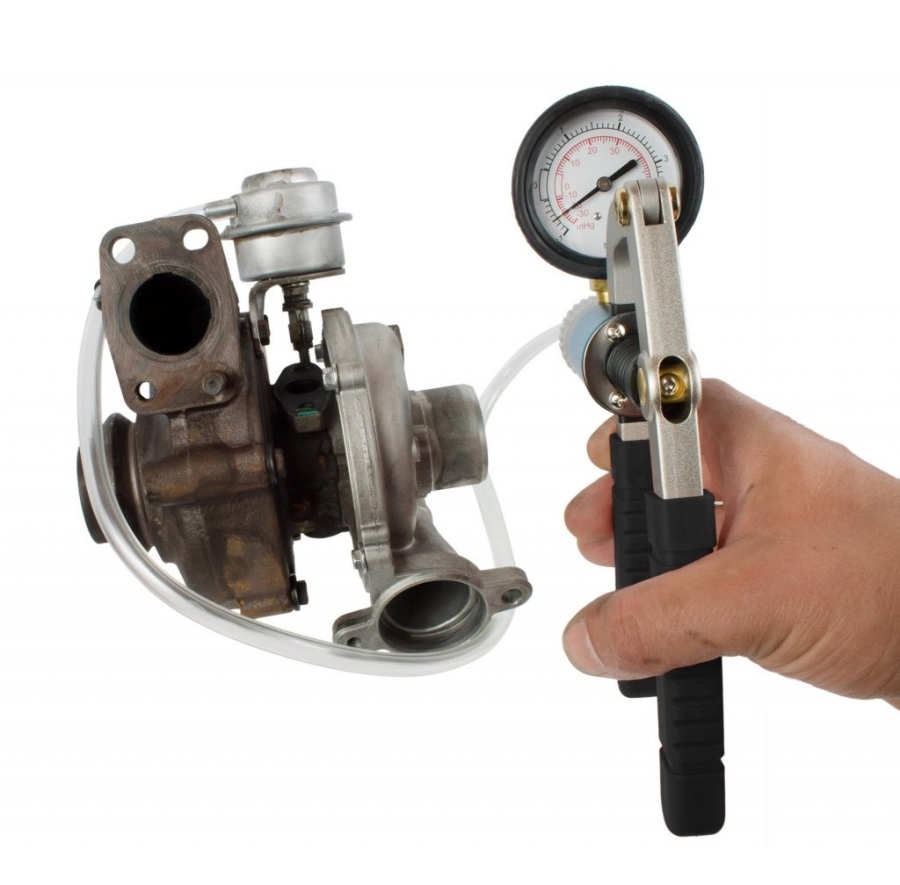
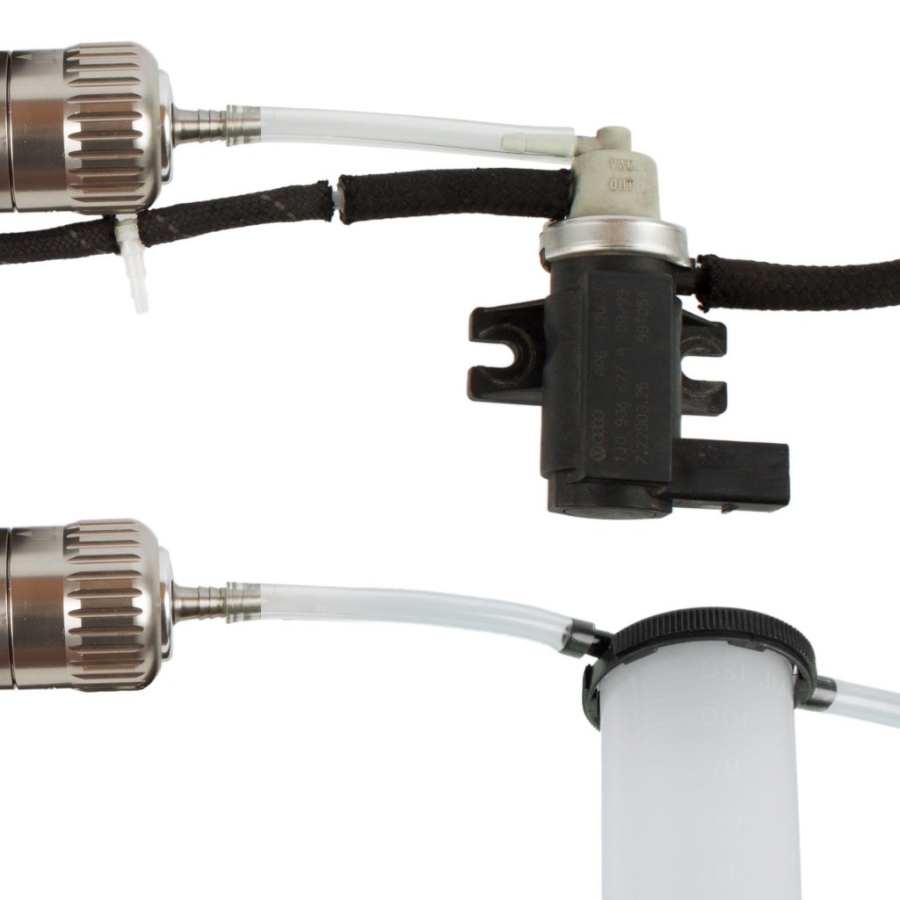
This vacuum and pressure hand pump kit is an essential tool for testing a wide range of automotive systems. It enables accurate diagnostics of vacuum-operated components, engine systems, and sealed units requiring controlled pressure or vacuum conditions.
Wide Range of Applications
The included hand pump and accessories allow testing and servicing of:
- Vacuum actuators and diaphragms
- Engine control systems
- Turbocharger and intake components
- Brake systems and fluid extraction
The kit is also suitable for draining fluids such as brake fluid, making it a multifunctional workshop solution.
Precision Measurement and Fault Detection
The integrated gauge enables monitoring of vacuum levels, helping identify engine and system faults based on vacuum behavior. Typical diagnostic patterns include:
- Normal engine: Stable readings between 16–22 inHg
- Worn valve guides: Lower readings with rapid fluctuations
- Leaking or burnt valves: Regular fluctuation between normal and low values
- Sticking valves: Sudden intermittent vacuum drops
- Worn piston rings: Constant low readings with specific throttle response behavior
- Blown head gasket: Fluctuating readings with sudden drops (~10 inHg)
- Incorrect air-fuel mixture: Irregular needle movement or drop
- Late ignition timing: Constantly low vacuum values
This enables quick identification of internal engine issues without disassembly.
Durable and Precision-Built Tool
Manufactured from high-quality materials, this precision tool is designed for long-term workshop use. Care should be taken during handling to maintain measurement accuracy.
Avoid:
- Dropping the tool
- Exposure to extreme heat (hot engines, open flames)
- Improper handling
Improper use may affect accuracy and tool lifespan.
Complete Kit for Workshop Use
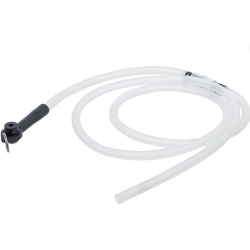
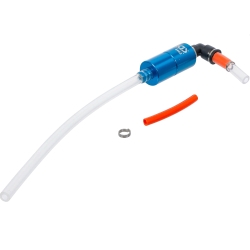
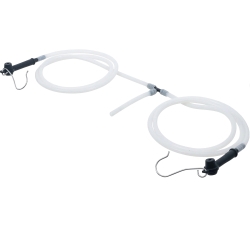
The vacuum pump kit includes multiple adapters and accessories, allowing connection to various systems and ensuring maximum versatility across different vehicle types.
Use of the Pressure/Vacuum Gun for Diagnosing Engine Damage
Before assuming that a malfunction of the engine is the cause of a specific problem, it is important to understand that all components of an engine must be in sufficiently good condition for the engine to operate properly.
The vacuum gun can be used to check the mechanical condition of an engine; however, it does not guarantee an accurate diagnosis of faults and/or their causes in every case of damage.
By connecting the vacuum gun to a multi-purpose vacuum port (in the area of the engine throttle body) using the supplied T-connector, a wide range of test procedures can be carried out.
By testing the vacuum values and observing the gauge needle in comparison to normal values and the typical needle movement during engine idle (usually steady, with readings between 16 inHg and 22 inHg), it is possible to identify a number of potential causes of faults.
This is by no means an exhaustive list of possible test procedures.
The vacuum gun and the supplied connectors allow for the inspection of nearly all components or systems that require proper sealing, tightness, and the presence of vacuum or pressure for correct operation.
| Condition / Problem | Vacuum Behavior (bar) | Diagnosis Notes |
|---|---|---|
| Reference (Normal Idle Range) | 0.54 – 0.75 bar | Standard vacuum range at engine idle for comparison. |
| Normal Engine | Stable between 0.54 – 0.75 bar | Indicates proper engine condition. |
| Worn Valve Guides | Lower than normal; needle fluctuates rapidly within ~0.10 bar range | Becomes stable as engine RPM increases. |
| Burnt or Leaking Valves | Needle fluctuates regularly between normal and low values | Periodic drops indicate valve sealing issues. |
| Sticking Valves | Sudden, intermittent vacuum drops | Sharp, irregular losses of vacuum. |
| Leaking Piston Rings | Constantly below normal (~0.41 – 0.54 bar) | During quick throttle open/close: sharp drop observed. At ~2000 RPM then throttle close: vacuum should rise by 0.07 – 0.17 bar. Lower increase indicates fault. |
| Defective Cylinder Head Gasket | Fluctuates between normal and low values | Vacuum drops by ~0.34 bar, then returns to normal as faulty cylinder completes cycle. |
| Incorrect Air/Fuel Mixture | Slow needle movement within 0.14 – 0.17 bar range | Poor mixture causes noticeable drop within same range. |
| Late Ignition / Valve Timing Issues | Constantly low vacuum at idle | Indicates delayed ignition timing or incorrect valve adjustment. |
Use of the Pressure/Vacuum Gun for Testing Fuel Lines
There are various ways to check the proper function and condition of fuel lines using a vacuum gun. These range from draining brake fluid to testing pressure regulation.
With the help of the supplied connectors, most existing lines can be disconnected, allowing all sections and lines to be tested individually.
When draining fuel from diesel engines, the collection container should be used. This allows a vacuum to be created, enabling the diesel fuel to be automatically extracted.
After several cycles, it should be possible to completely drain the fuel using this method.
For this procedure, connect the vacuum gun between the fuel filter and the fuel pump.
Use of the Pressure/Vacuum Gun for Testing the A/C, Heating, and Ventilation System
Using the supplied connectors, the vacuum of the air conditioning, heating, and ventilation system can be interrupted and tested for proper operation.
This allows, among other things, verification of the precise operation of the airflow direction flaps within the heating system.
To do this, disconnect the main line from the heating system and connect the vacuum gun at that point instead.
Select vacuum mode and generate a slight vacuum while monitoring the gauge reading and the proper operation of the system.