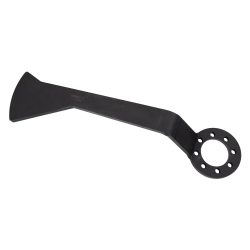
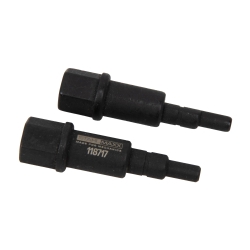
Brake Pressure Gauge Test Kit
-
Code:1271
-
Weight:3.386 Kgs
Overview:
✔ Professional brake pressure gauge kit for hydraulic brake diagnostics
✔ Designed for direct pressure testing at multiple brake system components
✔ Suitable for wheel cylinders, brake calipers, master cylinders and Teves ABS systems
✔ Enables pressure difference measurements between both brake circuits
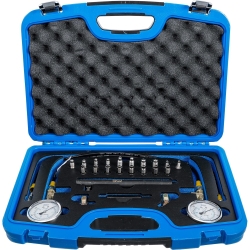
✔ Includes 2 pressure gauges with hoses for simultaneous testing
✔ Supplied with multiple fittings and adapters for broad vehicle compatibility
✔ Suitable for professional workshop and brake system service applications


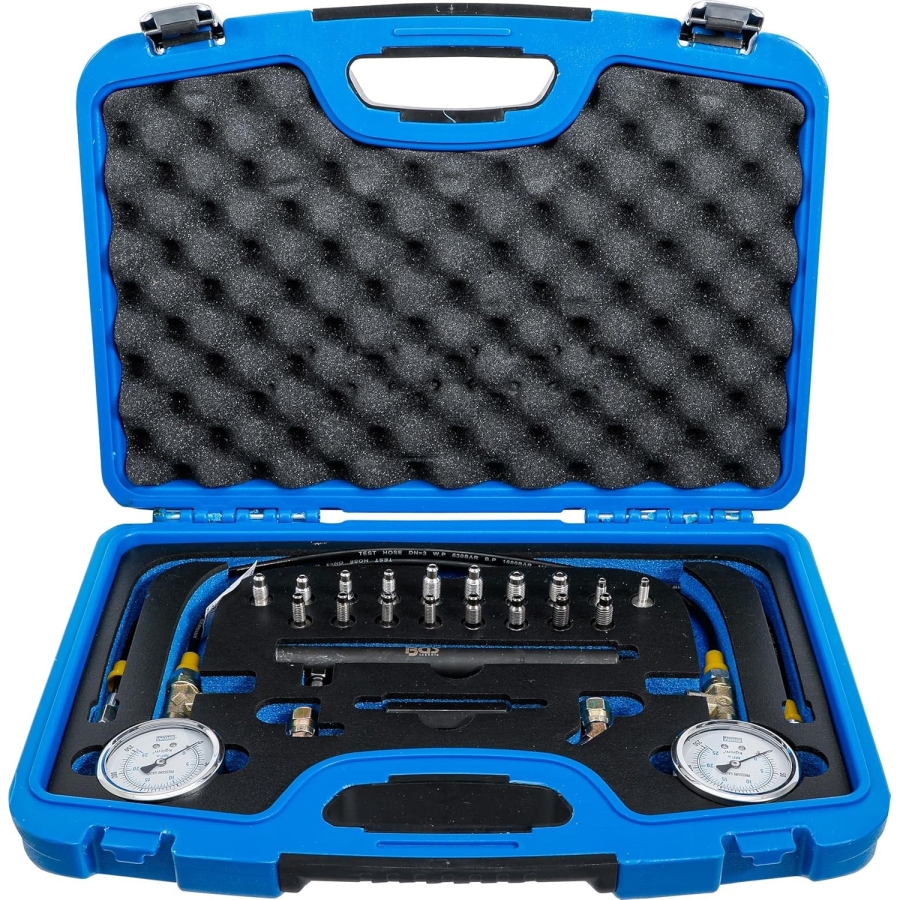
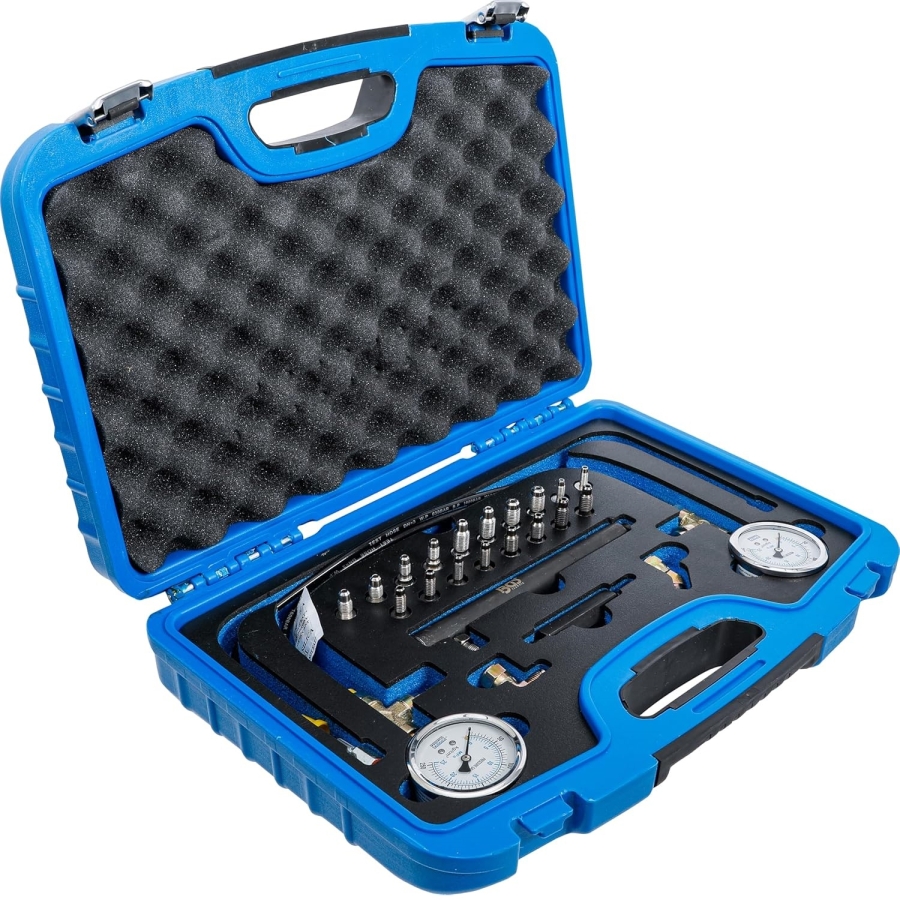
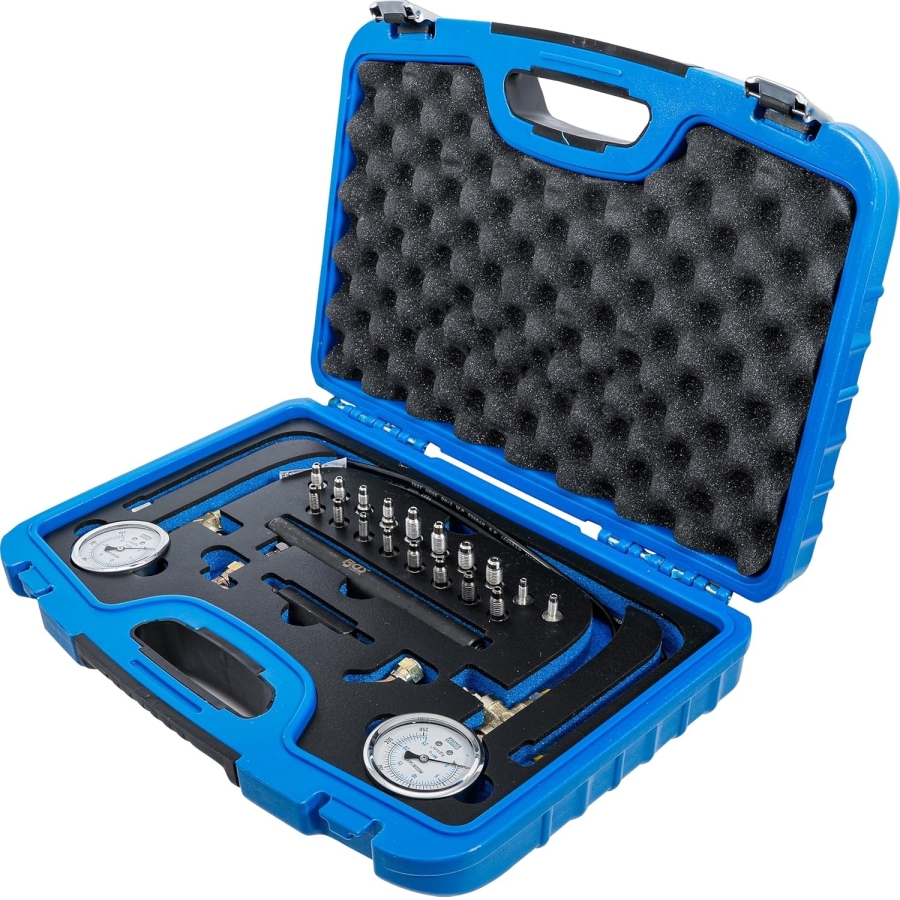
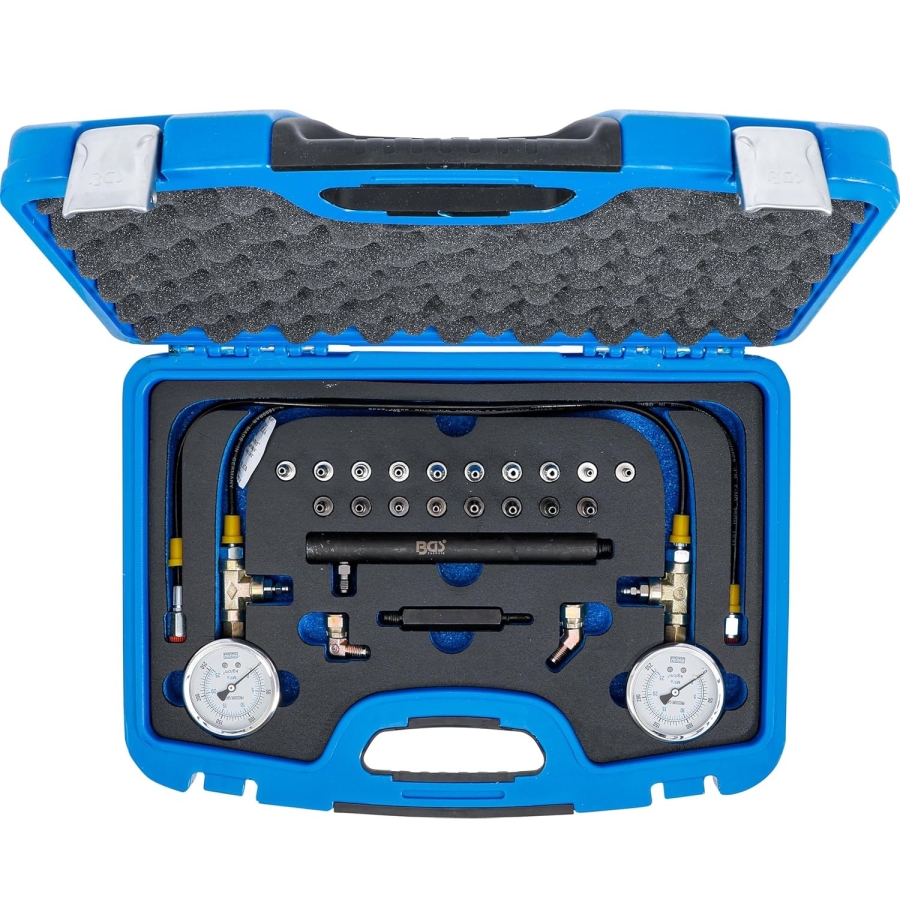
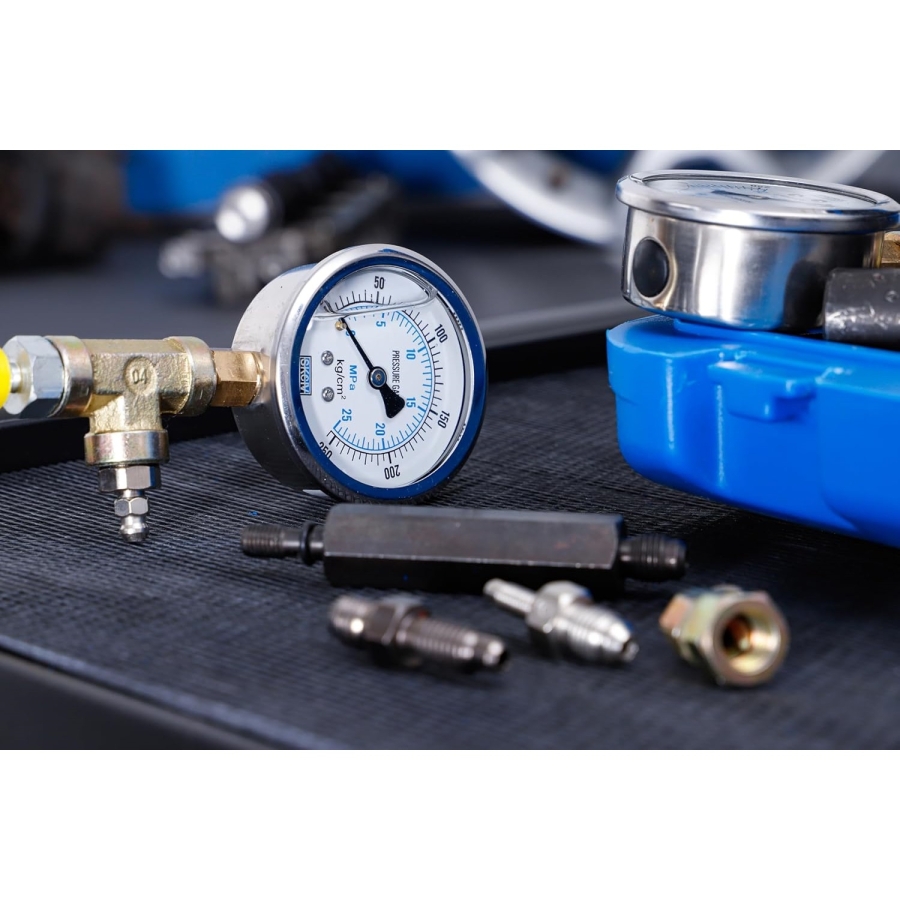
This brake pressure gauge test kit is designed for direct measurement of hydraulic brake pressure at critical points within the braking system. It can be connected directly to wheel brake cylinders, brake calipers, master cylinders, or hydraulic pump units on Teves ABS systems equipped with pressure accumulators.
The kit enables precise measurement and comparison of pressure differences between both brake circuits, allowing rapid diagnosis of hydraulic system irregularities and brake performance issues.
The supplied pressure gauges with hoses provide simultaneous readings for comparative measurements, helping identify pressure imbalances between different brake circuits.
Suitable for professional workshop environments and advanced brake system diagnostic operations.
Set Contents
Pressure Gauges
- 2 pressure gauges with hoses
- Measuring range: 0–255 kg/cm²
- Measuring range: 0–25 MPa
Adapters and Fittings
- 1 adapter for Teves ABS pressure accumulator brake systems
- 1 × 90° angle adapter
- 1 × 45° angle adapter
Fittings
- 2 × 7/16" × 24
- 2 × 1/4" × 28
- 2 × 3/8" × 24
- 2 × 5/16" × 24
- 2 × 7/16" × 20
- 2 × M7 × 1.0
- 2 × M8 × 1.25
- 2 × M10 × 1.5
- 2 × M10 × 1.0
Additional Components
- 1 threaded adapter
Applications
- Hydraulic brake pressure testing
- Wheel cylinder pressure testing
- Brake caliper pressure testing
- Master cylinder diagnostics
- Teves ABS pressure system testing
- Brake circuit pressure comparison
- Brake system troubleshooting
Technical Features
- Direct hydraulic pressure measurement
- Simultaneous dual-circuit pressure testing
- Compatible with Teves ABS pressure accumulator systems
- Wide adapter assortment for various applications
- Supports fast brake system diagnostics
- Durable workshop-grade construction
- Suitable for professional brake service use
This guide is intended as a quick reference only and does not replace the official workshop manual. Always refer to the vehicle-specific service literature for technical specifications such as torque values, as well as correct removal and installation procedures.
Instructions for Use
General Procedure
- Switch the ignition OFF.
- Depress the brake pedal approximately 20–40 times consecutively to release pressure from the brake system.
- Once a significant increase in pedal resistance is felt, depress the brake pedal three additional times.
- Refer to the vehicle-specific service literature for the correct installation procedure of the test assembly. Continue with steps 5–10, which are divided according to manufacturer.
TEVES Systems
- Remove the pressure accumulator together with the O-ring from the pump housing.
- Insert the adapter into the pump housing and install the pressure accumulator onto the adapter, as shown in the illustration above.
- Warning: Brake fluid is under extremely high pressure.
- During pressure measurements on TEVES systems, DO NOT open the bleed valve while the pressure accumulator is pressurized. Ensure the bleed valve is fully closed before switching the ignition ON to start the pump.
- Follow the vehicle-specific service literature for the remaining pressure testing procedure.
- Before removing the pressure gauge assembly, repeat the instructions in Step 2 to fully depressurize the system.
BOSCH Systems
- Remove the bleed screw from the brake caliper.
- Screw the adapter into the brake caliper only until it is properly seated.
- Install the pressure gauge onto the adapter and tighten securely.
- Switch the ignition ON until the pump motor stops, then switch the ignition OFF.
Note: If bleeding the pressure gauge assembly through the bleed valve, wrap a cloth or towel around the valve to catch any escaping brake fluid.
- Follow the vehicle-specific service literature for the remaining pressure testing procedure.
- Before removing the pressure gauge assembly, repeat the instructions in Step 2 to release pressure from the system completely.